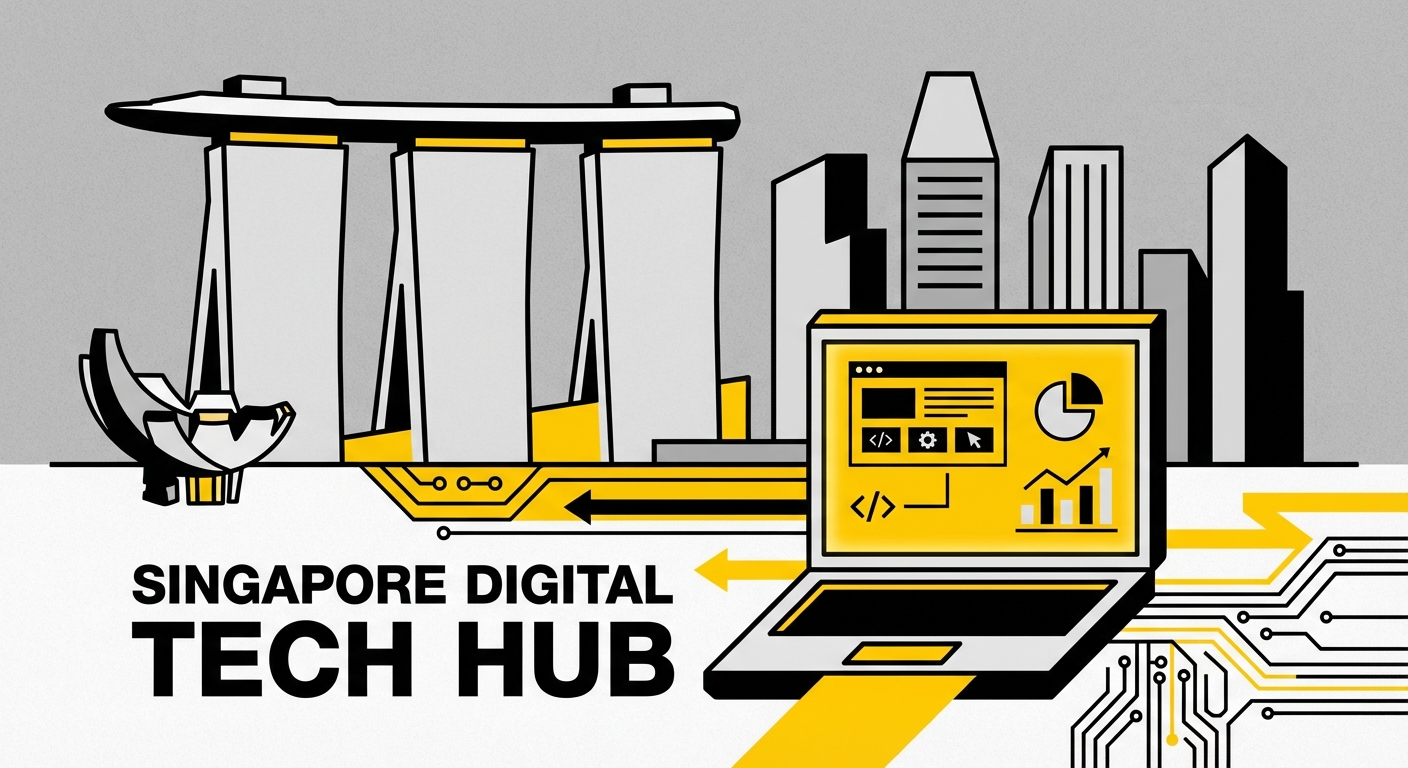
Website Localization for Singapore Market: English, Chinese, Malay
If you are running a business in Singapore, you already know that competition is fierce. Whether you are a logistics firm in Jurong, a boutique agency in Orchard, or a retail brand targeting the heartlands, your website is often your first—and only—chance to make an impression. Many business owners assume that because English is the primary language of administration and business in Singapore, an English-only website is enough.
However, relying solely on English means you are ignoring the cultural nuances of a multicultural market. In a landscape where customer acquisition costs on Google and Facebook are skyrocketing, your website needs to convert every visitor it gets. Localization isn’t just about translating words; it’s about building trust. When a customer sees their language and local context reflected on your site, the “trust barrier” drops, and the “buying intent” rises.
The Singapore Context: More Than Just One Language
Singapore’s “CMIO” (Chinese, Malay, Indian, and Others) model isn’t just a social framework; it’s a consumer map. While English is the lingua franca, significant portions of the population—especially decision-makers in traditional SMEs and older consumers with high purchasing power—prefer interacting in their mother tongue.
English: The Professional Standard
Your English content needs to be crisp and professional. However, “Singaporean English” in a business context is different from US or UK English. We use specific terms for things like “Central Business District (CBD),” “Heartlands,” and local regulatory terms like “ACRA” or “GST-registered.” If your website feels like a generic template from a US-based developer, Singaporean clients will sense the lack of local presence.
Chinese: Tapping into the SME Powerhouse
A large segment of the Singaporean business community consists of Chinese-speaking entrepreneurs. For sectors like manufacturing, construction, and traditional retail, having a professional Chinese version of your site (Simplified Chinese is the standard in Singapore) is a massive competitive advantage. It shows respect for the heritage and makes technical details easier to digest for those more comfortable in Mandarin.
Malay: Reaching the Community and the Region
Malay is the national language of Singapore. Beyond the local Malay community, having a Malay-language option signals that your business is ready to handle cross-border trade with Malaysia and Indonesia. For Singaporean businesses looking to expand across the causeway, this is a strategic necessity.
To see how your current site stacks up against local competitors in terms of performance and reach, you can use our free website audit tool to get a baseline.
Technical Speed: The Non-Negotiable Factor
In Singapore, users have some of the fastest internet speeds in the world, but they also have the lowest patience for slow websites. If your site takes more than 3 seconds to load, your potential customer has already clicked back and gone to a competitor.
At GX Automation, we build websites using a modern tech stack (not WordPress). This allows our sites to load in under 1 second. When you localize a site into three languages, a traditional platform like WordPress often becomes bloated with heavy plugins, slowing down your site and hurting your SEO. Our custom approach ensures that whether a user is viewing your site in English or Chinese, the speed remains lightning-fast.
This speed is crucial for the 70% of Singaporean traffic that comes from mobile devices. Whether someone is browsing on their commute on the MRT or during a quick lunch at a hawker centre, your site must be instant.
Localizing the User Journey and Payments
Localization goes beyond language; it includes the tools and platforms people use every day. In Singapore, the digital ecosystem revolves around specific apps and payment methods.
- WhatsApp Integration: Singaporeans live on WhatsApp. If your “Contact Us” page is just a boring form, you are losing leads. We integrate WhatsApp automation and chatbots directly into your localized site. This allows a customer to ask a question in English or Chinese and get an immediate response or be routed to the right person.
- Pricing in SGD: If you are targeting the Singapore market, your pricing must be in SGD. Seeing “USD” or “RM” on a Singapore-facing site creates friction. For standard high-performance websites, our pricing typically ranges from SGD 800 to SGD 2,300 (equivalent to RM 2,688 to RM 7,688), offering a one-time payment model that avoids the “subscription trap” many agencies set.
- Local References: Use local landmarks and contexts. Instead of “Shipping Nationwide,” use “Delivery island-wide, including Sentosa and Jurong Island.” Instead of “Contact our office,” say “Visit our showroom near the CBD.”
SEO and Discoverability for Multilingual Sites
Search Engine Optimization (SEO) works differently for localized sites. A person searching for “web design Singapore” might be different from someone searching for “网页设计 新加坡” (Web Design Singapore in Chinese).
By localizing your content, you rank for a wider variety of keywords. This is often “low-hanging fruit” because many Singaporean businesses are too lazy to optimize for Chinese or Malay keywords.
- Hreflang Tags: We ensure your site tells Google exactly which version to show based on the user’s location and language settings.
- Mobile-First Indexing: Since most Singaporeans use high-end smartphones, we prioritize mobile-first design. Your site won’t just look “okay” on a phone; it will be built for it.
Check out our showroom to see examples of how we handle high-performance, mobile-first interfaces that work across different languages and regions.
Practical Steps to Localize Your Singapore Website
If you are ready to move beyond a basic English site, here is a practical roadmap:
- Identify Your Top Languages: Look at your Google Analytics. Where is your traffic coming from? If you have a high percentage of visitors with Chinese language settings, start there.
- Don’t Use Raw Google Translate: Automatic translation often misses local context and sounds robotic. It can even be offensive if nuances are missed. Always have a human review your translations.
- Localize Your Call-to-Action (CTA): Instead of a generic “Submit,” use something that resonates. In a business context, “Get a Quote” or “Book a Consult” works well.
- One-Time Payment Model: Avoid agencies that charge you a monthly fee just to “host” your localized pages. At GX Automation, we believe in a transparent pricing model where you own your assets outright.
Why Singapore Businesses Choose GX Automation
Operating in the JB-Singapore corridor gives us a unique perspective. We understand the Singaporean demand for efficiency, quality, and speed, but we also understand the regional context of Malaysia. We offer:
- No Monthly Fees: Pay once, own it forever. No “rental” fees for your own website.
- 14-Day Money-Back Guarantee: We are confident in our sub-1-second load times and custom builds.
- Cross-Border Expertise: We help SG firms expand into MY and vice-versa, ensuring your digital presence is ready for both markets.
A localized website is no longer a luxury for Singaporean SMEs; it is a requirement for staying relevant in a digital-first economy. By speaking your customer’s language—literally and culturally—you build a brand that is perceived as local, trustworthy, and professional.
Ready to dominate the Singapore market with a high-speed, multilingual website?
Stop losing leads to slow, English-only websites. Let’s build a custom solution that loads in under a second and speaks your customers’ language.
WhatsApp us today at +6016 938 3640 to start your project: https://wa.me/60169383640
Ready to Automate Your Business?
Let's talk about how we can help your business grow.