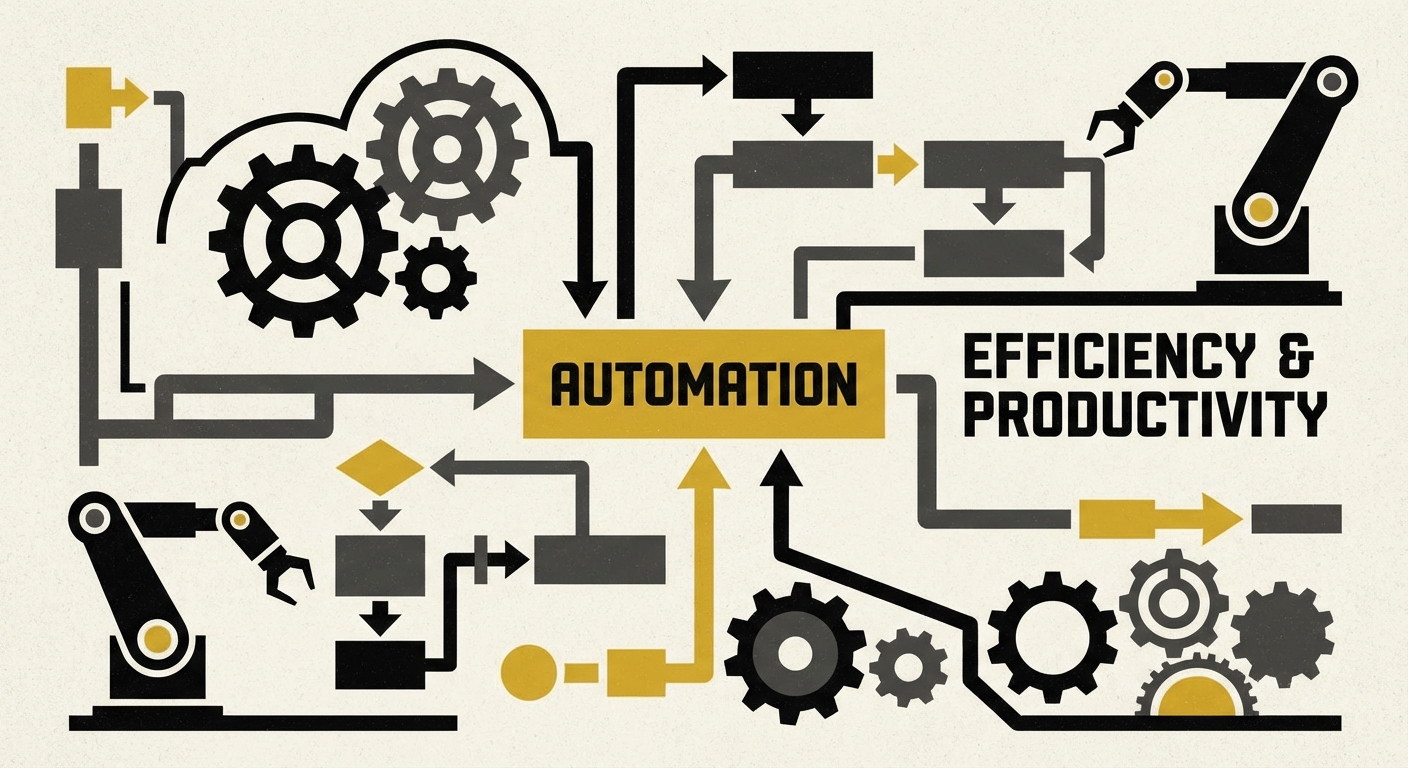
Report Generation Automation for Businesses
If you are a business owner in Johor Bahru, KL, or Singapore, you likely know the “Friday Evening Dread.” It’s that time of the week when you—or your most expensive manager—sit down to manually export data from Shopee, download CSV files from GrabFood, pull bank statements, and try to make sense of it all in a messy Excel spreadsheet. By the time the report is finished, the data is already 48 hours old, and you’re too exhausted to actually use those insights to grow your business.
Manual report generation is one of the biggest “silent killers” of productivity in Malaysian SMEs. When your data is scattered across different platforms, you aren’t just losing time; you’re making decisions based on guesswork. Automation changes this by turning your data into a live asset that works for you, rather than a chore that holds you back.
Why Manual Reporting is Costing Your Business More Than You Think
Many business owners view manual reporting as a “free” task because they’re already paying their staff a monthly salary. This is a dangerous misconception. Let’s look at the actual numbers.
If an operations manager in Kuala Lumpur earning RM 6,000 a month spends just 5 hours a week compiling reports, that is 20 hours a month dedicated to data entry. That equates to roughly RM 750 per month in “hidden” costs, or RM 9,000 per year. For a Singapore-based SME, where a manager might earn SGD 5,000, those 20 hours cost you roughly SGD 600 per month.
Beyond the salary cost, manual reporting introduces three major risks:
- Human Error: A single typo in an Excel formula can lead to an overestimation of profits or an undercount of inventory, leading to poor stock-taking decisions.
- Delayed Action: If you only see your sales performance on Monday morning, you missed the chance to adjust your marketing spend on Saturday afternoon when it mattered most.
- Low Morale: Top-tier talent doesn’t want to spend their time copy-pasting rows from Foodpanda into a Google Sheet. Automation frees your team to focus on strategy.
Common Reporting Bottlenecks for Local Businesses
In the MY-SG corridor, businesses often operate across multiple digital ecosystems. This fragmentation is where the reporting process usually breaks down.
The E-commerce Sync Problem
If you sell on Shopee, Lazada, and TikTok Shop while also running a physical retail outlet in Mid Valley or KSL Mall, your inventory and sales data are likely in four different places. Without automated reporting, you have no real-time view of your total “Omnichannel” performance.
The Logistics and Service Gap
For service-based businesses in Selangor or Johor—such as plumbing, air-con servicing, or logistics—reporting often involves tallying physical invoices or WhatsApp messages. Manually tracking which technician is the most profitable or which neighborhood has the highest churn rate is nearly impossible without a custom dashboard.
Fragmented Communication
In Malaysia and Singapore, business happens on WhatsApp. Orders, complaints, and lead inquiries flood in 24/7. When this data isn’t automatically captured into a reporting tool, it essentially doesn’t exist for your long-term planning.
How Automation Transforms Your Data Workflow
At GX Automation, we build custom web applications and dashboards that act as a “Single Source of Truth” for your business. Unlike generic SaaS platforms that charge high monthly subscriptions (which can eat into your margins as the Ringgit fluctuates), we provide high-performance, custom-built solutions for a one-time payment.
Here is how an automated reporting system actually looks in practice:
- Direct API Integration: Instead of downloading CSVs, our systems talk directly to your tools (Grab, Shopify, Xero, Stripe, etc.). The data flows automatically into a centralized database.
- Instant Visualizations: You don’t look at rows of numbers. You look at a dashboard that loads in under 1 second, showing you “Green” for targets met and “Red” for areas needing attention.
- Mobile-First Access: Since 70% of Malaysian web traffic is on mobile, we design our dashboards to be fully functional on your phone. Whether you’re at a mamak in JB or a meeting in Singapore’s CBD, your data is in your pocket.
- No WordPress Bloat: We don’t use WordPress. We use a modern tech stack that ensures your reporting dashboard is secure, lightning-fast, and custom-tailored to your specific KPIs.
The Power of WhatsApp-Integrated Reports
In the local context, business owners are rarely sitting at a desk all day. You’re on the move. This is why we specialize in WhatsApp automation.
Imagine receiving a WhatsApp message every night at 10:00 PM with a concise summary:
- Total Sales Today: RM 4,500
- Top Selling Product: Iced Latte (54 units)
- Pending Leads: 12
- Low Stock Alerts: 3 items
This allows you to stay informed without ever having to log into a complicated software system. It brings the report to where you already spend your time.
3 Practical Steps to Start Automating Your Reports
If you’re feeling overwhelmed by data, you don’t need to automate everything overnight. Follow these steps to transition:
1. Audit Your Current Process
Track how much time your team spends on reports for one week. Identify which data source is the most annoying to deal with. Is it the Shopee payout report? The GrabFood commissions? Start with the biggest pain point first. You can use our free website audit tool to see if your current digital presence is even capable of handling modern integrations.
2. Define Your “Golden Metrics”
Don’t track 50 different things. Pick the 5 metrics that actually move the needle for your business (e.g., Customer Acquisition Cost, Daily Net Profit, Inventory Turnover). Automation is only useful if the data is actionable.
3. Move Away from Monthly Subscriptions
Many SMEs fall into the trap of paying RM 200–RM 500 every month for reporting “plugins” or SaaS tools. Over three years, that’s RM 18,000. For a fraction of that cost, you can have a custom-built dashboard from GX Automation with a one-time fee, no monthly subscriptions, and a 14-day money-back guarantee.
Is Your Business Ready for Automation?
The gap between “traditional” SMEs and “modern” tech-enabled businesses is widening. In the competitive landscape of the Klang Valley and Singapore, the companies that win are the ones that can react the fastest.
If you are still manually calculating your margins or waiting until the end of the month to see if you made a profit, you are operating at a massive disadvantage. Whether you need a simple sales dashboard or a complex custom web application to manage cross-border logistics, we can build it.
Our standard website and automation packages range from RM 2,688 to RM 7,688, while custom SaaS MVPs and complex dashboards are quoted based on your specific needs. We focus on performance, speed, and local relevance—ensuring your tech works as hard as you do.
Ready to stop wasting time on manual reports?
Click here to WhatsApp us and let’s discuss how we can automate your business reporting. We can jump on a quick call to audit your current workflow and show you what’s possible with a custom-built, one-time payment solution.
Ready to Automate Your Business?
Let's talk about how we can help your business grow.