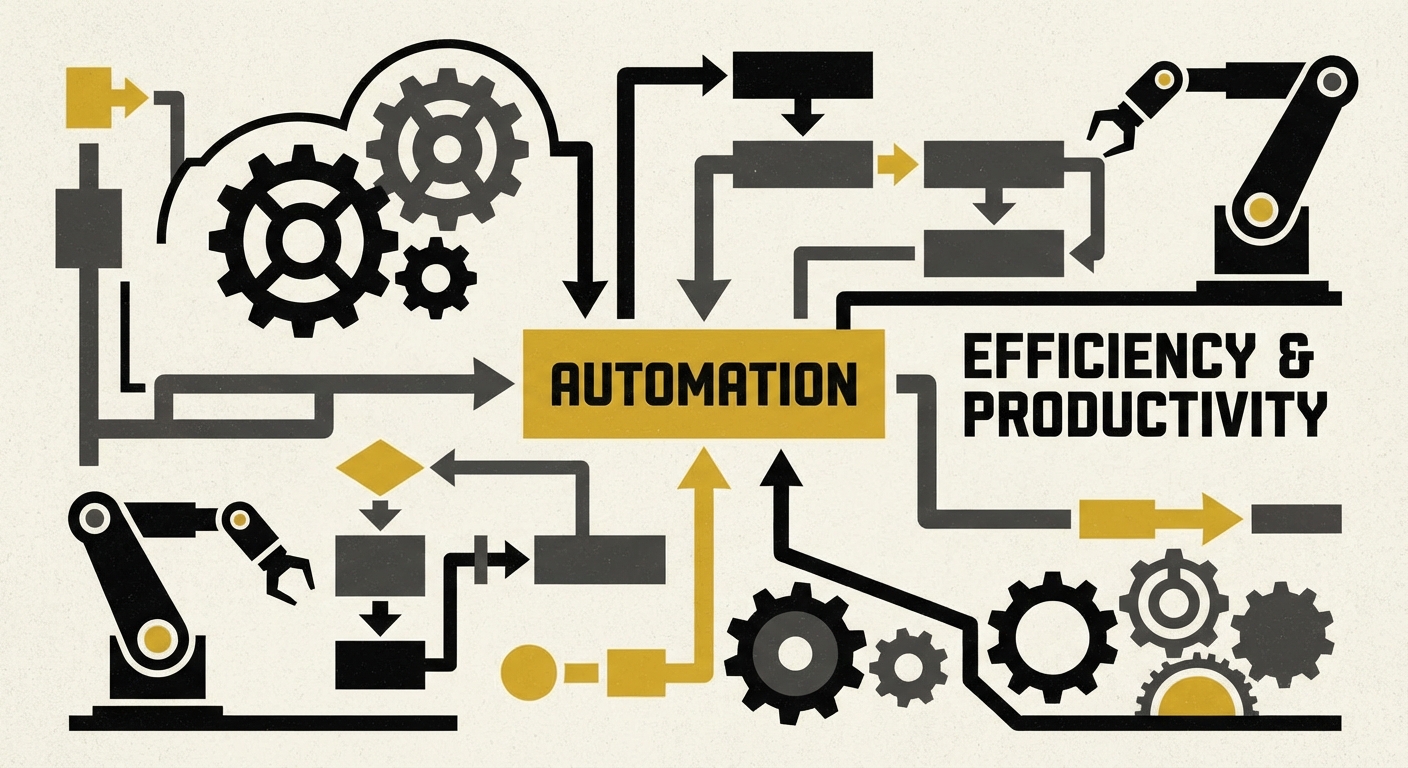
Order Processing Automation for E-commerce
If you’ve ever stayed up until 2:00 AM in your office in Mount Austin or Petaling Jaya manually typing customer addresses into a courier portal, you know that success in e-commerce can be a double-edged sword. As your order volume grows, the “manual way” of doing things—copy-pasting data from WhatsApp, checking bank receipts, and updating Excel sheets—stops being a minor annoyance and starts becoming a growth killer. In the competitive Malaysian and Singaporean markets, speed isn’t just a luxury; it’s the difference between a repeat customer and a negative review on Google or Shopee.
The Scaling Wall: Why Manual Order Processing Fails
Most Malaysian SMEs start their journey on platforms like Shopee, Lazada, or Facebook Marketplace. These are great for getting started, but they often lead to a fragmented workflow. You might have orders coming in from three different marketplaces, plus direct messages on WhatsApp and Instagram.
When you’re processing 5 orders a day, manual entry is fine. When you hit 50 or 100 orders a day, the cracks start to show:
- Human Error: A typo in a Singaporean postal code or a Malaysian house number leads to failed deliveries and wasted shipping costs.
- Stock Discrepancies: You sell a “Last Piece” item on WhatsApp while it’s also sitting in a Shopee buyer’s cart.
- Customer Anxiety: In our local “WhatsApp culture,” customers expect instant updates. If you’re too busy packing boxes to reply to “Where is my parcel?”, you lose trust.
The solution isn’t hiring more admin staff—that just increases your overhead. The solution is order processing automation. By building a custom system that connects your sales channels to your fulfillment process, you can handle 10x the volume without adding a single person to your payroll.
Turning WhatsApp into an Automated Sales Engine
In Malaysia and Singapore, WhatsApp is the primary way people communicate with businesses. However, manual WhatsApp sales are incredibly inefficient. Your staff spends hours answering the same questions: “Is this in stock?”, “How much is shipping to Sarawak?”, or “Can I see the size chart?”
At GX Automation, we focus on WhatsApp automation that moves the customer from “Hi” to “Paid” without human intervention. Instead of a staff member manually sending bank account details, an automated system can:
- Show a digital catalog of products.
- Check real-time stock levels from your database.
- Generate a payment link (via Billplz, ToyyibPay, or Stripe).
- Automatically push the order details to your fulfillment team once the payment is confirmed.
This turns your WhatsApp from a chaotic chat app into a high-performance sales funnel that works while you sleep.
Why Speed and Mobile-First Design Matter for Fulfillment
Over 70% of Malaysian web traffic happens on mobile devices. If your e-commerce site is built on a heavy, bloated platform like WordPress, it likely takes 4–8 seconds to load on a standard 4G connection in Johor Bahru or Selangor. That delay doesn’t just annoy customers; it breaks the automation flow.
If your website loads in under 1 second—which is our standard at GX Automation—customers complete their orders faster, and your backend systems receive data instantly. We don’t use WordPress because we believe business tools should be lean and purpose-built. A custom-coded site means no “plugin conflicts” that break your order exports or slow down your warehouse team.
You can see the difference in performance by using our free website audit tool to see how your current site measures up against modern standards.
The “One-Time Payment” Advantage
Many automation tools and e-commerce platforms charge monthly subscriptions. For a growing SME, these “SaaS taxes” add up. You might pay RM 300 for a website builder, RM 150 for a WhatsApp tool, and another RM 200 for an inventory manager. Before you know it, you’re losing thousands of Ringgit every year to subscriptions.
We operate on a different model. Our standard high-performance websites range from RM 2,688 to RM 7,688 as a one-time investment. For custom web applications and complex fulfillment automation, we provide project-based quotes. This means you own your tech stack. No monthly fees, no “renting” your business infrastructure, and a 14-day money-back guarantee to ensure you get exactly what you need.
You can view our transparent pricing structure here to see which tier fits your current business stage.
Practical Steps to Automate Your Fulfillment Today
If you’re looking to streamline your operations, here is a practical roadmap for Malaysian and Singaporean SMEs:
1. Centralize Your Inventory
Stop keeping separate stock for Shopee, your website, and your physical shop in JB or KL. Use a single source of truth—a custom dashboard—that updates all channels the moment a sale is made. This prevents overselling and the “refund headache.”
2. Automate Shipping Labels
Manual handwriting or typing of labels is the biggest time-sink in e-commerce. Your order processing system should integrate directly with local couriers like PosLaju, J&T, NinjaVan, or GrabExpress. With one click, you should be able to generate a manifest and print 100 shipping labels.
3. Implement Automated Post-Purchase Notifications
Once a parcel is picked up, your system should automatically send a WhatsApp or SMS to the customer with their tracking link. This reduces “Where is my order?” inquiries by up to 80%.
4. Use a Custom Dashboard for Analytics
Don’t rely on messy spreadsheets. A custom dashboard allows you to see your cross-border performance. For example, you can track how many orders are going to Singapore (collected in SGD) versus Malaysia (collected in RM) and see your real-time profit margins after currency conversion and shipping fees. You can check out our showroom to see examples of how these data features look in practice.
Cross-Border Efficiency (The MY-SG Factor)
For businesses operating in the Johor-Singapore corridor, automation is even more critical. Handling SGD payments, customs documentation, and international shipping rates requires precision. An automated system can calculate the correct shipping fee based on weight and destination automatically, ensuring you don’t lose money on undercharged shipping to Singapore.
By removing the manual “checking” phase, you can ensure that an order placed in Orchard Road at 10:00 AM is processed in your JB warehouse by 10:05 AM, potentially reaching the customer the very next day.
Conclusion: Stop Working in Your Business, Start Working on It
Order processing automation isn’t about replacing people; it’s about freeing your team from “robotic” tasks so they can focus on marketing, product development, and customer relationships. If you spend your day fixing shipping errors and answering “is this available” on WhatsApp, you aren’t an entrepreneur—you’re an admin clerk for your own company.
Investing in a high-speed, custom-built automation system is a one-time cost that pays dividends every single day in time saved and errors avoided.
Ready to reclaim your time and scale your e-commerce operations?
Let’s talk about building a system that fits your specific workflow. No monthly fees, no WordPress bloat—just pure performance.
Contact GX Automation via WhatsApp: https://wa.me/60169383640
Ready to Automate Your Business?
Let's talk about how we can help your business grow.