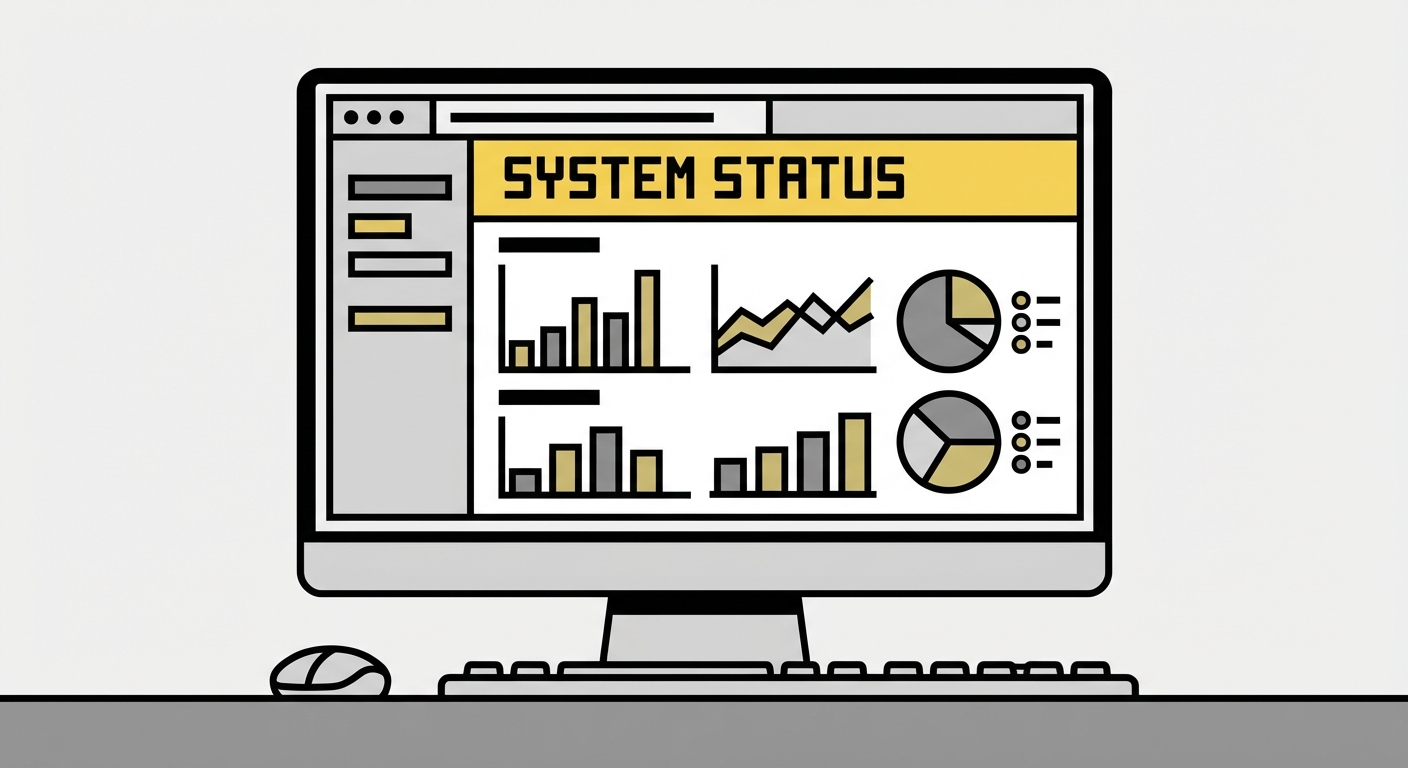
Expense Tracking Dashboard for Businesses
If you are running a business in Kuala Lumpur, Johor Bahru, or Singapore, you know the “shoebox” problem. At the end of every month, business owners find themselves staring at a pile of crumpled Grab receipts, Foodpanda invoices, and petrol chits, trying to figure out where the company’s cash flow went. For many Malaysian SMEs, expense tracking is a manual, painful process that usually involves a messy Excel sheet that only one person knows how to update.
Managing business expenses shouldn’t feel like a second job. Whether you are a retail outlet in Mid Valley or a logistics firm moving goods between JB and Singapore, having a clear, real-time view of your spending is the difference between scaling up and just surviving. A custom expense tracking dashboard allows you to stop reacting to bank statements and start making proactive decisions.
Why Spreadsheets Are Killing Your Productivity
Most Malaysian SMEs start with Excel or Google Sheets. While these tools are free, they come with a hidden cost: human error and wasted time. If your accounts executive spends three days a month chasing staff for receipts and manually typing in figures, you are paying for data entry, not data analysis.
Common issues with manual expense management include:
- Lost Receipts: Physical thermal paper receipts (like those from petrol stations or hardware stores) fade within weeks. By the time tax season rolls around, they are blank pieces of paper.
- Delayed Visibility: You only see your total spend weeks after the money has left the account.
- Duplicate Claims: Without a centralized system, it’s easy for the same Shopee invoice or Grab ride to be claimed twice by accident.
- Currency Confusion: For businesses operating in the MY-SG corridor, tracking expenses in both RM and SGD across different platforms can lead to accounting nightmares if the exchange rate isn’t logged at the time of purchase.
Instead of fighting with formulas, many businesses are moving toward custom web applications. You can see examples of how these interfaces work by visiting our /showroom, where we demonstrate high-performance dashboard layouts designed for speed and clarity.
The Power of a Mobile-First Expense Dashboard
In Malaysia, 70% of web traffic happens on mobile. Your staff and managers aren’t always sitting at a desk; they are on-site in Selangor, meeting clients in Singapore, or visiting suppliers in JB. A modern expense management app must be mobile-first.
When we build custom web applications at GX Automation, we don’t use WordPress. We use a modern tech stack that ensures your dashboard loads in under 1 second. This speed is crucial for “on-the-go” entries. If a salesperson can’t upload their parking receipt in 5 seconds while walking back to their car, they won’t do it at all.
Key Features of a Custom Malaysian Expense Tool:
- Instant Photo Uploads: Use the phone’s camera to snap a photo of a receipt and upload it immediately.
- WhatsApp Integration: Since every Malaysian business runs on WhatsApp, you can integrate a system where staff simply “message” their receipts to a dedicated number, and the backend automatically logs it into the dashboard. (Explore our /solutions/whatsapp-automation for more on this).
- Category Tagging: Group expenses by department (Marketing, Operations, Logistics) or by platform (Grab, Shopee, FB Ads).
- Approval Workflow: Managers receive a notification to approve or reject a claim with one click.
One-Time Payment vs. Monthly Subscriptions
A major pain point for Malaysian startups and SMEs is the “subscription trap.” Many popular expense management apps charge per user, per month. If you have 20 employees, you could be looking at paying RM 400 to RM 800 every single month indefinitely. Over three years, that’s nearly RM 30,000 spent on a tool you don’t even own.
At GX Automation, we believe in a one-time payment model. While our standard high-performance websites range from RM 2,688 to RM 7,688, our custom web applications and SaaS MVPs are quoted based on your specific requirements. The goal is simple: you pay for the development once, and you own the software. No monthly “rent,” no price hikes, and no losing access to your data if you stop paying.
This approach is particularly beneficial for businesses in the Singapore-Malaysia region looking to keep their overheads low while maintaining a professional, custom-built tech stack. If you’re curious about how your current digital tools are performing, you can use our free website audit tool to check your site’s speed and optimization.
Practical Steps to Digitalize Your Expense Management
If you are ready to move away from the shoebox method, here is a practical roadmap to implementing a better system:
1. Audit Your Current Spending Categories
Before building a dashboard, look at your last three months of bank statements. Identify your “High-Frequency” expenses (like Grab, toll, and office supplies) and your “High-Value” expenses (like rent, inventory, and marketing spend). Your dashboard should prioritize these categories.
2. Implement a “Digital First” Policy
Tell your team that physical receipts are only backups. The primary record must be a digital entry. Encourage them to download PDF invoices from Grab and Shopee immediately rather than waiting for the end of the month.
3. Centralize Your Data
A dashboard is only as good as the data it receives. By using a custom web app, you can pull data from multiple sources. If you have a fleet of drivers in JB, their petrol claims can be funneled into the same view as your KL office’s utility bills.
4. Focus on Security
Business expenses are sensitive data. Unlike generic plugins, a custom-built dashboard allows you to set strict permission levels. You can decide exactly who sees the payroll data versus who only sees the office supply budget.
Solving the MY-SG Cross-Border Challenge
For businesses with offices in both Johor Bahru and Singapore, currency fluctuation is a constant headache. A custom dashboard can be programmed to pull real-time RM to SGD exchange rates.
When an employee in Singapore submits a claim for a SGD 15 lunch, the system can automatically record the RM equivalent based on that day’s rate. This saves your accountant hours of manual calculation and ensures your profit and loss statements are actually accurate.
Why Speed and Ownership Matter
In the competitive landscape of the Klang Valley and Singapore, efficiency is your greatest advantage. A slow, bloated system built on old technology will frustrate your staff and lead to data gaps.
By choosing a custom web application, you get:
- Performance: No more waiting for “loading” icons.
- Ownership: You own the code and the data.
- Scalability: Start with simple expense tracking and add payroll or inventory modules later as your business grows.
Our 14-day money-back guarantee ensures that your transition to a digital dashboard is risk-free. We focus on building tools that solve real problems for Malaysian business owners, without the fluff and without the recurring fees.
Get Your Custom Dashboard Quote Today
Stop wasting time on manual data entry and start seeing where your money is actually going. Whether you need a simple expense tracker or a complex business process automation tool, we can build it for you.
Contact GX Automation today to discuss your custom web application.
WhatsApp us directly: https://wa.me/60169383640
Ready to Automate Your Business?
Let's talk about how we can help your business grow.